
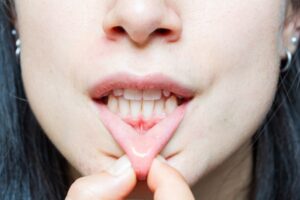
Your gums do much more than frame your smile; they protect the roots of your teeth and help keep them firmly in place. When gum tissue begins to recede, however, your teeth become more vulnerable to sensitivity, decay, and even tooth loss. Fortunately, gum grafting is a proven procedure that can restore receded gum tissue and improve both the health and appearance of your smile.
Here’s what you should know about treating gum recession with gum grafting.
What Causes Gum Recession?
Gum recession occurs when the gum tissue pulls away from the teeth, exposing the roots. This process can happen gradually, making it easy to overlook until symptoms become noticeable.
Common causes of gum recession include:
- Gum disease.
- Brushing too aggressively.
- Teeth grinding or clenching.
- Misaligned teeth that place excessive pressure on the gums.
- Tobacco use.
- Genetics.
As more of the tooth root becomes exposed, you may experience increased sensitivity to hot, cold, or sweet foods and beverages. Teeth may also appear longer than usual, and small notches may develop near the gumline.
What is Gum Grafting?
A gum graft is a periodontal procedure designed to replace lost gum tissue. During treatment, a periodontist or qualified dentist places healthy tissue over the exposed root to restore the gumline.
In many cases, the grafting tissue is taken from the roof of the patient’s mouth. Depending on your needs, your dentist may also use donor tissue. The graft is carefully secured in place, where it gradually integrates with the surrounding gums as it heals.
The procedure is performed using local anesthesia, making it comfortable for most patients.
Benefits of Gum Grafting
Gum grafting offers both functional and cosmetic advantages. By covering exposed roots, the procedure can reduce tooth sensitivity and protect vulnerable areas from decay.
Additional benefits include:
- Slowing or preventing further gum recession.
- Helping preserve the bone and supporting structures around the teeth.
- Improving the appearance of the gumline.
- Lowering the risk of future tooth loss related to gum recession.
For many patients, gum grafting not only improves oral health but also restores confidence in their smile.
Recovery and Long-Term Care
Most patients recover from gum grafting within one to two weeks, although complete healing takes longer. During recovery, your dentist may recommend eating soft foods, avoiding the surgical site while brushing, and using a prescribed antimicrobial mouth rinse to keep the area clean.
Long-term success depends on maintaining excellent oral hygiene and addressing the underlying cause of the recession. Brushing gently with a soft-bristled toothbrush, flossing daily, attending regular dental cleanings, and treating gum disease promptly can all help protect your newly restored gum tissue.
Gum recession won’t grow back on its own, and delaying treatment can allow the problem to worsen over time. If you’ve noticed that your teeth appear longer, your gums are receding, or you’re experiencing tooth sensitivity, schedule an evaluation with your dentist. If gum grafting is recommended, it can help protect your teeth, restore your gumline, and keep your smile healthy for years to come.
About the Author
Dallas-based periodontist Dr. Andrew Barnett earned his Doctorate in Dental Medicine from the University of Pittsburgh and completed his residency at the University of Michigan, where he also obtained his Certificate in Periodontics. A board-certified periodontist, he is skilled in providing surgical services, including soft tissue grafts. Dr. Barnett also regularly takes continuing education courses and is a member of the American Dental Association, the Texas Dental Association, and the American Academy of Periodontology. If your gum recession has become an issue, let us treat it. Book online or call (214) 691-2614.