
Sinus Lift Dallas
Prepare Your Upper Jaw for Dental Implants

Dental implants are a truly excellent tooth replacement option, but they come with a complex treatment process. Some patients require one or more preliminary surgical procedures before they can move forward with rebuilding their smile. For example, you might need to undergo a sinus lift. What exactly is a sinus lift, and what can you expect from this service at Park Lane Periodontal and Dental Implant Group? Continue reading below to find out more about sinus lifts in Dallas.
Why Choose Park Lane Periodontal and Dental Implant Group for Sinus Lifts?
- Highly Trained Periodontal Specialist
- Multiple Forms of Sedation Available
- We Are Firmly Committed to Excellent Care
What Is a Sinus Lift?
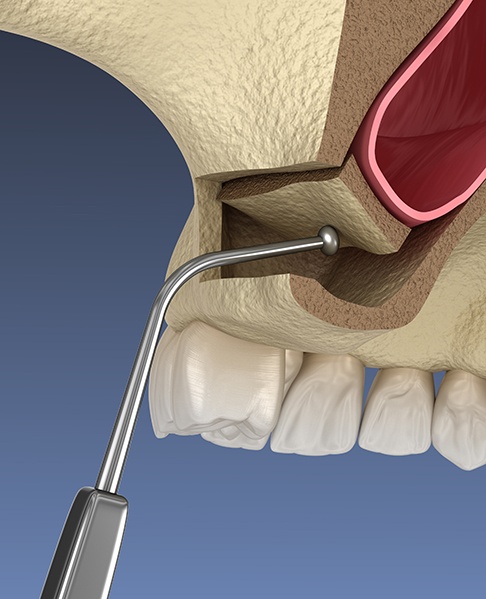
A sinus lift is basically a special type of bone graft that is exclusively for the upper jawbone. Similar to a regular bone graft, it involves grafting material into a portion of the jawbone where it is lacking in density, strength, or size. However, before the graft is placed, an additional step is necessary. The sinus cavity must be moved upward.
A sinus lift is necessary in cases where the upper jaw is not thick enough to support dental implants. This procedure can prevent implants from penetrating the sinus membrane, causing complications.
Indications for a Sinus Lift

Not everyone who needs dental implants for their upper jawbone requires a sinus lift. Our team will use advanced imaging equipment to examine your oral structures and determine whether a sinus lift or other preliminary procedures are necessary.
You might need a sinus lift if:
- You have a naturally thin or weak upper jawbone.
- You have lost some bone density in your jaw due to gum disease.
- Bone resorption after the extraction of your natural teeth has reached the point where your upper jawbone has lost a significant amount of its density.
- You have a naturally large sinus cavity.
The Sinus Lift Process
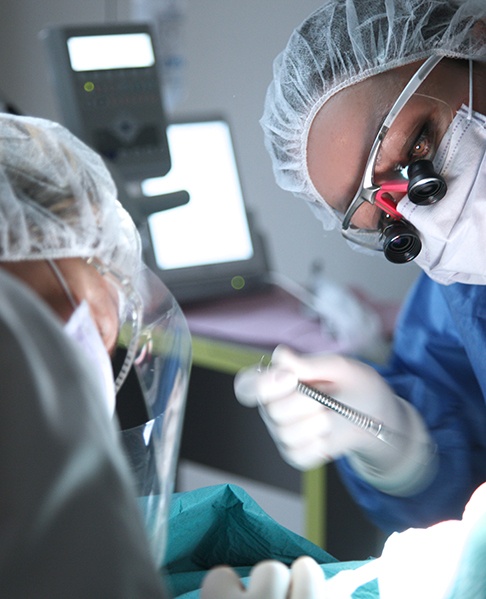
You can expect to feel little to nothing during the sinus lift process. We will thoroughly numb your mouth, and we may administer sedation as well. Once you are settled in, Dr. Barnett will create an incision in your gum tissue in order to expose your bone. Then, an opening will be created in the bone so the sinus membrane can be gently move upward. Next, a block of bone tissue will be inserted beneath the sinus and secured into place. To finish the surgery, the gums are closed with sutures.
You may experience swelling and discomfort for 1 – 2 weeks after your surgery. Thereafter, your mouth should feel fairly normal. However, it may take 4 – 9 months for your bone to heal and integrate the grafted tissue. After that has occurred, you may become eligible to receive dental implants.
Sinus Lift FAQs
Can I Determine I Need a Sinus Lift on My Own?
No, even though you may know your dental history, you can’t tell for sure whether you’ll need a sinus lift until a detailed 3D cone beam image is taken to reveal how much bone density you have. If you have lost teeth on your upper jaw or have been told you have a large sinus cavity, you may be at higher risk, but only an examination with Dr. Barnett will tell you definitively whether you will need this preliminary procedure.
Why Is a Sinus Lift Worth Getting?
If you want to have dental implants that are successful and work for decades, getting a sinus lift is well worth the effort and time. Although the overall process requires quite a bit of time, the longevity and lifespan of dental implants, as well as their biting strength, make up for this initial investment. If you can keep the goal in mind during your sinus lift, you’ll reap the rewards with successful implants and enjoy all the freedoms that come with this incredible treatment.
What Kinds of Complications Can Happen If I Don’t Get a Sinus Lift?
Attempting dental implant placement when the upper jawbone doesn’t have sufficient density can lead to several unpleasant outcomes. First, you could have failed implants that never fully support your new prosthetic teeth. As a result, your restored smile will have a short life at best. Even before that point, however, placing implants without a necessary sinus lift can irritate or puncture your sinuses, resulting in repeated infections like sinusitis, facial pain, and congestion.
What Are Other Reasons I May Need a Sinus Lift?
Most often, tooth loss (even if it was recent) and a naturally large sinus cavity are the main reasons, but you could need one because you’ve suffered facial trauma, such as a broken jaw or knocked-out teeth. You may also need this procedure if you have worn you have gone a long time wearing dentures, allowing the upper jawbone to deteriorate over time.
Does Getting a Sinus Lift Hurt?
During the procedure itself, you shouldn’t have any pain because of a local anesthetic. As we work, you may feel some pressure, but when the anesthetic wears off, you probably will have a sore mouth and some discomfort, which can be managed with over-the-counter pain medication. To control swelling and pain, you can place a cold compress on your face in 20-minute increments. After about 2 weeks, you should feel pretty much normal again. If your discomfort increases or is accompanied by a fever, call us immediately.